
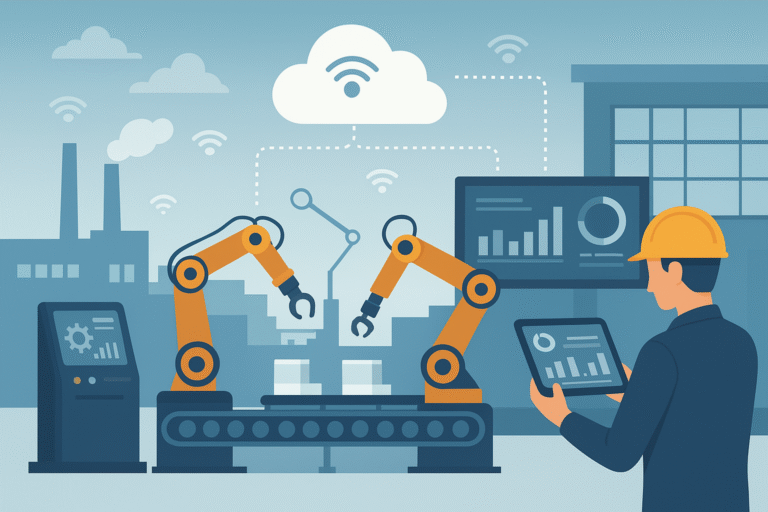
Southeast Asia is undergoing one of its most important industrial shifts in decades. The region, long known for cost-efficient manufacturing, is now rapidly embracing automation, AI, and connected systems to build the next generation of smart factories.
And the momentum is real.
Across Malaysia, Vietnam, Thailand, Indonesia, and the Philippines, companies are redesigning how they operate. What was once manual and labour-intensive is now becoming digital, data-driven, and automated.
Why is this transformation happening now?
Several major forces are shaping this shift:
1. Global supply chains are changing
Brands are diversifying beyond traditional hubs and looking to Southeast Asia for stable, tech-ready manufacturing partners.
2. Labour challenges are accelerating adoption
Talent shortages and rising operational complexity are pushing companies to rely more on automation for consistency and scalability.
3. Governments are incentivising transformation
Industry 4.0 roadmaps, grants, tax benefits, and training programmes are encouraging manufacturers to modernise quickly.
4. Technology is becoming more accessible
Robotics, machine vision, predictive maintenance, and AI tools are no longer “future tech”. They’re practical solutions companies can deploy today.
Malaysia’s growing presence in the smart factory landscape
Malaysia is emerging as a strong regional player in this transition. The country is seeing increasing adoption of:
- Robotics and automated assembly
- Machine vision quality control
- Smart warehousing and logistics
- Digital twins and real-time monitoring
- Predictive maintenance powered by AI
What makes Malaysia particularly interesting is its expanding ecosystem of local automation providers, not just foreign technology vendors. This homegrown capability is strengthening the country’s resilience and accelerating adoption.
Other Southeast Asian markets are also moving quickly
- Vietnam continues to attract high-tech manufacturers and is integrating automation into fast-growing industrial zones.
- Thailand is modernising its automotive and electronics sectors with robotics and intelligent production lines.
- Indonesia is ramping up automation in logistics, consumer goods, and export-driven industries.
This collective momentum is shifting perceptions of the region; from low-cost production to high-value, tech-enabled manufacturing.
A new manufacturing playbook for Southeast Asia
Southeast Asia’s race to build smart factories is more than an industrial trend. It represents a strategic pivot toward innovation, productivity, and global competitiveness.
And while every country is moving at its own pace, the direction is unmistakable: the region is becoming a serious contender in advanced manufacturing.
The companies that embrace automation now will define the next chapter of growth, not just for themselves, but for the entire region.