
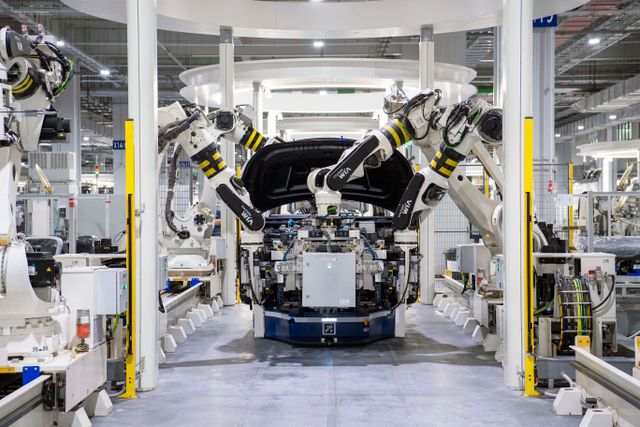
Malaysia’s manufacturing sector is entering a new phase of transformation. Rising labour costs, increasing customer expectations, and the government’s push towards 3,000 smart factories by 2030 are accelerating the adoption of Industry 4.0 technologies across the country.
For manufacturers, automation is no longer just about replacing manual work. It is about building smarter, more resilient operations that can adapt to changing market demands. Here are seven automation trends shaping Malaysian manufacturing in 2026.
1. Collaborative Robots (Cobots)
Unlike traditional industrial robots that require safety cages and dedicated workspaces, collaborative robots are designed to work safely alongside human operators. Cobots are increasingly being deployed for:
- Assembly
- Pick-and-place applications
- Machine tending
- Packaging
- Palletising
- Quality inspection
Their flexibility and lower implementation costs make them particularly attractive for SMEs looking to automate without overhauling existing production lines.
They can also help manufacturers improve productivity while allowing workers to focus on higher-value tasks.
2. AI is moving from the office to the manufacturing floor
Artificial intelligence is becoming a practical manufacturing tool rather than a future concept. Manufacturers are using AI to:
- Detect defects through machine vision
- Optimise production scheduling
- Predict equipment failures before they happen
- Analyse production data for continuous improvement
- Reduce energy consumption
Instead of replacing workers, AI supports faster and more informed operational decisions.
3. Machine Vision is raising quality standards
As export markets demand stricter quality requirements, machine vision systems are replacing manual inspection processes. Using industrial cameras and AI, manufacturers can inspect products in real time for:
- Surface defects
- Missing components
- Incorrect labels
- Dimensional accuracy
The result is more consistent quality and significantly lower rejection rates.
4. Predictive maintenance is replacing reactive repairs
Unexpected equipment breakdowns remain one of the biggest causes of production downtime. Modern factories are installing IoT sensors that continuously monitor machine health, tracking factors such as vibration, temperature, pressure, and power consumption.
When abnormal patterns are detected, maintenance teams can intervene before a failure occurs. Benefits include:
- Reduced downtime
- Lower maintenance costs
- Longer equipment lifespan
- Better production planning
5. Autonomous Mobile Robots (AMRs) are transforming material handling
Material movement within factories has traditionally relied on forklifts and manual labour. AMRs are changing this by autonomously transporting:
- Raw materials
- Components
- Finished products
- Work-in-progress inventory
Unlike traditional Automated Guided Vehicles (AGVs), AMRs navigate dynamically without fixed tracks, making them suitable for facilities that frequently change layouts.
Malaysia’s manufacturing industry is at a pivotal moment. With ongoing labour challenges, increasing global competition, and stronger government support for Industry 4.0, businesses that embrace automation today will be better positioned for sustainable growth.
The good news is, automation doesn’t have to happen all at once. Many successful manufacturers begin with targeted improvements, such as deploying sensors on critical equipment, introducing cobots for repetitive tasks, or implementing machine vision for quality inspection, and scale over time.
The key is to start with solutions that address your most pressing operational challenges while building a foundation for a smarter, more connected factory.
Looking to Upgrade?
Whether you’re taking your first step toward automation or scaling existing smart factory initiatives, Mirai helps you define a practical, results-driven strategy.
Connect with us today to build a smarter, more resilient manufacturing operation aligned with your long-term growth.