
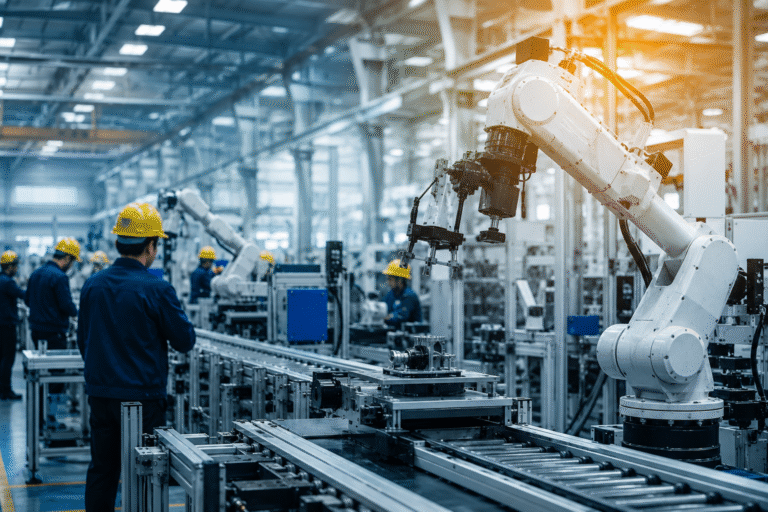
In 2026, industries around the world are facing a growing challenge: not enough workers to fill critical roles. From manufacturing to logistics, companies are struggling to hire and retain talent. As automation continues to advance, a key question emerges:
Is it replacing jobs, or actually creating better ones?
The answer is more balanced than many expect. Automation isn’t simply reducing jobs; it’s reshaping them, often into safer, more skilled, and more sustainable roles.
Why automation still matters in today’s workforce
1. It fills critical labor gaps
Many industries face shortages in repetitive, physically demanding, or hazardous roles. Automation helps take over these tasks, ensuring operations can continue even when hiring is difficult.
2. It improves job quality
Instead of manual, repetitive work, employees are shifting into roles that involve monitoring systems, analysing data, and managing automated processes. These jobs are typically less physically taxing and offer better long-term career growth.
3. It creates new types of roles
As automation systems expand, so does the need for skilled workers—technicians, engineers, system integrators, and data analysts. These are roles that didn’t exist at the same scale before.
4. It helps retain workers
Better working conditions, safer environments, and more engaging tasks can improve job satisfaction. This makes it easier for companies to keep employees beyond the short term.
At the same time, automation is evolving alongside the workforce:
- Machines are becoming easier to use, requiring less specialised training to operate.
- Collaborative robots (cobots) are designed to work alongside humans, not replace them.
- AI and software tools are assisting workers in decision-making, not removing them entirely.
But automation isn’t a complete solution on its own. Companies still need to invest in training and upskilling to ensure workers can transition into new roles. Without this, the gap between technology and talent can widen.
There are also concerns to manage. Some roles may be reduced or phased out, and not all workers can transition easily without support. This makes workforce planning and education more important than ever.
In summary, automation isn’t just about doing more with fewer people, it’s about doing better with the people you have. It has the potential to turn labor shortages into an opportunity: creating safer, more meaningful, and higher-value jobs across industries.
Looking to upgrade?
If you are exploring smarter ways to optimise your workforce, Mirai is here to help you design the right automation strategy for your operations. Our team provides end-to-end support, from system planning and integration to workforce upskilling, aligned with your production goals.
Connect with us today to discover how automation can help you build a more resilient, efficient, and future-ready workforce!