Cobot Integration to Production Lines: Key Steps and Why They Matter
What is Cobot?
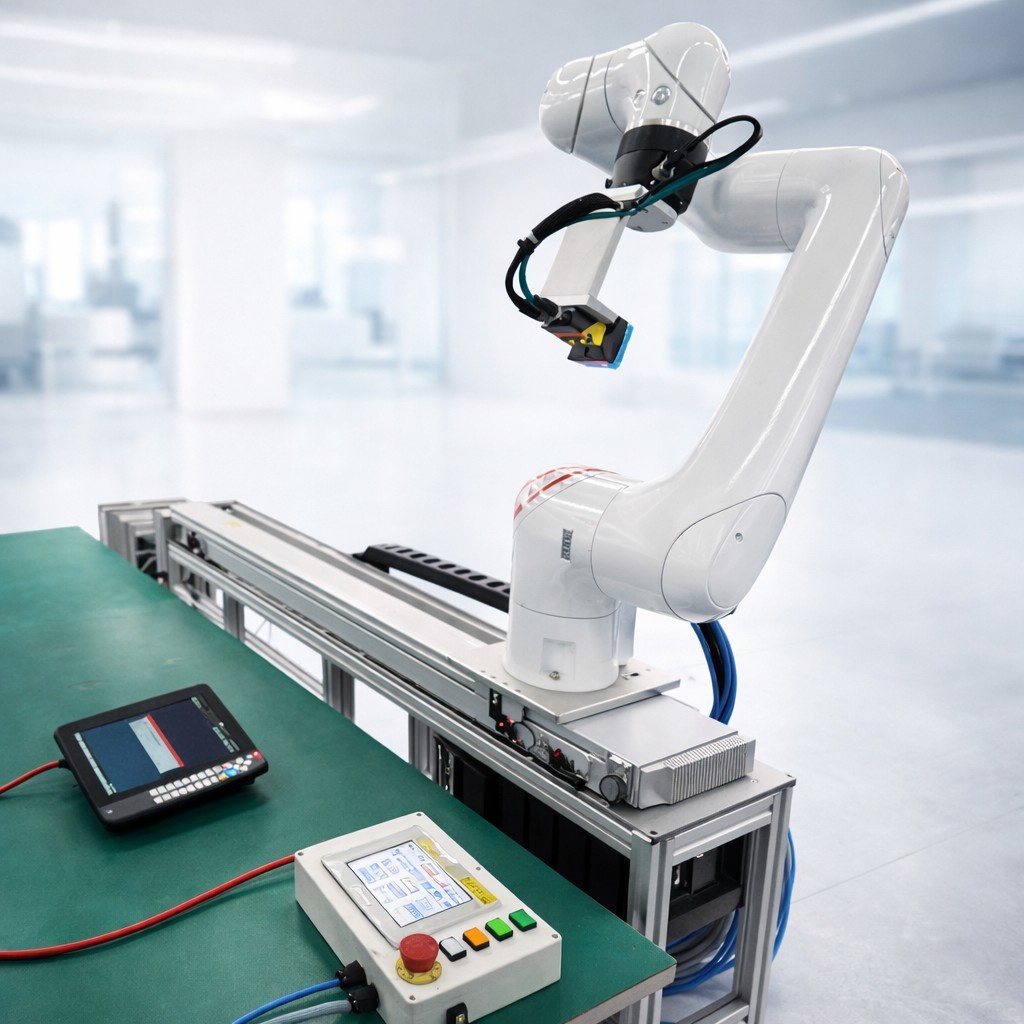
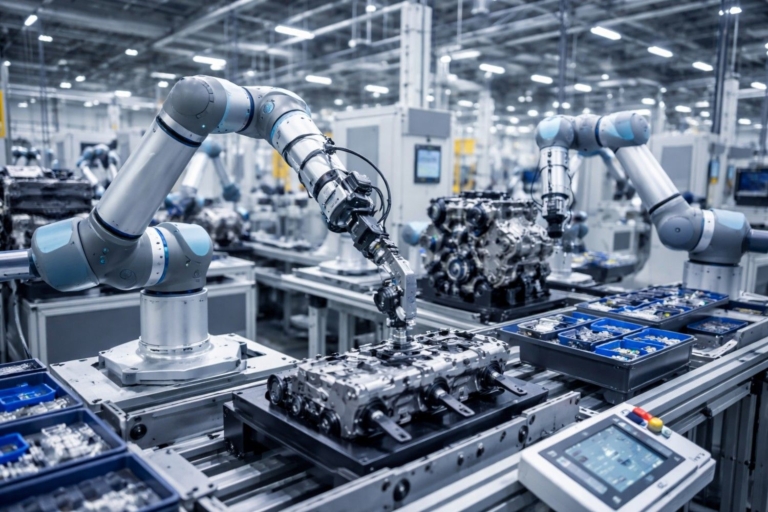
A collaborative robot (cobot) is a robotic system designed to work safely alongside humans in a shared workspace. Unlike traditional industrial robots that operate inside cages, cobots are equipped with force sensors, vision systems, and safety features that allow close human interaction.
Cobots are increasingly used in industries such as electronics, automotive, food processing, and medical device manufacturing.
However, integrating a cobot into a production line requires structured steps, and not just installation. Each step exists to reduce risk, protect ROI, and ensure smooth operation.
1. Task Selection
Why: Not every task is suitable for automation.
It is crucial to start by identifying repetitive, rule-based, low-to-medium payload tasks such as pick-and-place, machine tending, or palletizing. Choosing the right task ensures:
Clear productivity gains
Realistic ROI
Minimal workflow disruption
Poor task selection is the most common cause of automation failure.
2. Feasability & Safety Assesment
Why: To prevent safety risks and costly redesign.
It is important evaluate:
Cycle time compatibility
Workspace layout
ROI projections
Risk assessment
Compliance with standards like ISO 10218 and ISO/TS 15066 ensures safe human-robot collaboration.
3. System Design & Integration
Why: To ensure seamless operation within the existing production line. This includes:
Selecting proper end-of-arm tooling
Integrating vision systems
PLC communication
Conveyor synchronisation
Without proper integration planning, cobots may create bottlenecks instead of improving throughput.
4. Programming & Testing
Why: To validate performance before full deployment.
Cobots are often programmed via teach-by-demonstration. Testing will help verify:
Cycle time accuracy
Error handling
Emergency stop response
Human interaction safety
With these steps, it can effectively help reduce downtime after launch.
Each key step in cobot integration exists to answer critical questions before implementation begins:
Is the task truly suitable for automation?
Is the setup safe for human-robot collaboration and compliant with standards?
Will the cobot integrate smoothly with existing systems and workflows?
Does the investment deliver measurable ROI?
And are employees properly trained and ready to adopt the change?
By addressing these questions through a structured approach, cobot integration shifts from being a risky experiment to a controlled, scalable, and strategically sound automation initiative.
Ready to Integrate Cobots with Mirai?
If you’re planning to enhance your production line with collaborative robots, Mirai is here to support you every step of the way. From task assessment and system design to integration and training, we deliver cobot solutions tailored to your operational needs, helping you improve productivity, quality, and flexibility.
Get in touch with Mirai today and discover how cobot integration can elevate your manufacturing performance!