
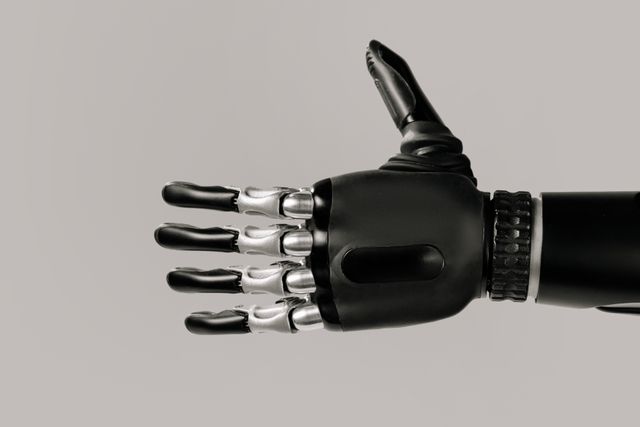
Imagine a robot that can do more than just lift heavy boxes or repeat the same movement over and over again. Instead, it can carefully pick up a tiny screw, assemble delicate electronic parts, or sort fragile food items without damaging them. This is what a dexterous robotic hand is designed to do.
What is a dexterous hand?
A dexterous hand is a robotic hand with multiple fingers and joints that can move much like a human hand. It uses sensors and artificial intelligence to understand how much force to apply, allowing it to grasp, hold, and manipulate objects of different shapes, sizes, and materials.
Why does it matter?
Traditional industrial robots are excellent at repetitive tasks, but they struggle with jobs that require flexibility and precision. A dexterous hand allows robots to perform more human-like tasks, making automation possible for work that previously required skilled workers.
For example, instead of using different machines for different products, a robot with a dexterous hand can quickly adapt to changing production needs.
Why should Malaysia adopt this technology?
Malaysia is a major manufacturing hub, especially in electronics, semiconductors, automotive, medical devices, and food processing. As industries become more advanced, manufacturers need smarter automation to stay competitive.
Here are a few reasons why dexterous robotic hands could benefit Malaysia:
- Address labour shortages: Many factories face difficulties hiring and retaining workers. Dexterous robots can take over repetitive or physically demanding tasks, allowing workers to focus on higher-value jobs.
- Improve productivity: Robots can work continuously with consistent quality, helping manufacturers produce more while reducing errors.
- Support high-tech manufacturing: Malaysia is investing in advanced industries such as semiconductor packaging and medical devices, where precision is critical. Dexterous hands are well suited for these delicate tasks.
- Increase flexibility: Modern factories often produce different products on the same production line. Robots with dexterous hands can switch between tasks more easily than traditional automation systems.
- Enhance workplace safety: Dangerous or repetitive jobs, such as handling sharp components or hazardous materials, can be performed by robots, reducing workplace injuries.
Looking to upgrade?
As manufacturing becomes smarter and more automated, dexterous robotic hands can help businesses improve precision, boost productivity, and adapt to increasingly complex production demands.
Whether you’re exploring robotic automation for the first time or looking to enhance your existing manufacturing processes, Mirai can help you identify the right solutions for your operations. From robotic system design and integration to AI-powered automation and smart factory implementation, our team supports every step of your digital transformation.
Connect with us today to discover how next-generation robotics can help future-proof your manufacturing business and keep you competitive in the era of Industry 4.0.