
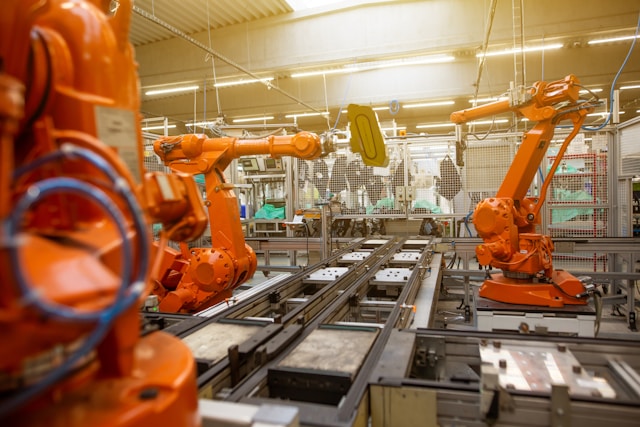
Malaysia’s automation push is gaining momentum across the country, supported by national policies and growing industry adoption. Within this broader movement, certain regions are taking on a more prominent role in advancing automation, advanced manufacturing, and industrial innovation. Penang is one of the key states driving this progress.
The shift is not recent, but it is accelerating.
Penang has long been associated with electronics and semiconductor manufacturing. Today, that foundation is expanding into higher-value segments, including automation equipment, precision engineering, and smart manufacturing systems.
According to Malay Mail, Penang recorded approximately RM25 billion in investments between 2020 and 2025 in machinery and automation-related sectors. This level of capital inflow reflects a structural transition toward more advanced industrial capabilities.
These investments are not isolated. They are supported by new initiatives designed to strengthen the ecosystem, such as the introduction of collaborative campuses. These platforms are intended to bring together industry players, researchers, and talent pipelines in a single environment. The focus is to accelerate innovation in automation, semiconductor technologies, and manufacturing equipment.
This model addresses a core challenge in automation: fragmentation. By aligning education, research, and industry needs, Penang is building a more integrated system that can support long-term growth.
The implications extend beyond the state itself:
- Penang’s growth reinforces Malaysia’s position in global supply chains
As demand increases for high-precision and automated production, regions with strong technical ecosystems become more valuable. Penang is positioning itself to capture that demand.
- Penang’s growth shifts the competitive narrative
Malaysia is no longer competing primarily on labour cost. Instead, it is moving toward capability: engineering expertise, system integration, and advanced manufacturing output.
- Penang’s growth creates a multiplier effect
As more companies invest in automation and equipment manufacturing, supporting industries such as components, software, services, also expand. This strengthens the overall industrial base.
However, the transition is not without constraints:
- Sustaining this growth requires continuous talent development. Automation systems demand skilled engineers, technicians, and data specialists. Without a steady pipeline, expansion will slow.
- Cost is another factor. Advanced manufacturing and automation infrastructure require significant investment. Smaller firms may struggle to keep pace without targeted support.
- Integration also remains complex. Moving from traditional production to fully connected, automated systems involves operational redesign, not just technology adoption.
But despite these challenges, the direction is clear. Penang is evolving from a manufacturing hub into an automation and technology centre. Its trajectory reflects a broader shift within Malaysia: from labour-intensive production to knowledge-driven industry.
Looking to upgrade?
Whether you’re exploring automation or scaling your existing capabilities, Mirai helps you take the next step with clarity and confidence. From system integration to smart manufacturing solutions, our team supports your journey toward more efficient, high-value production.
Connect with us today to build a smarter, future-ready operation aligned with Malaysia’s evolving manufacturing landscape.